

Molluscum Contagiosum: Symptoms, Causes, and Treatment Guide

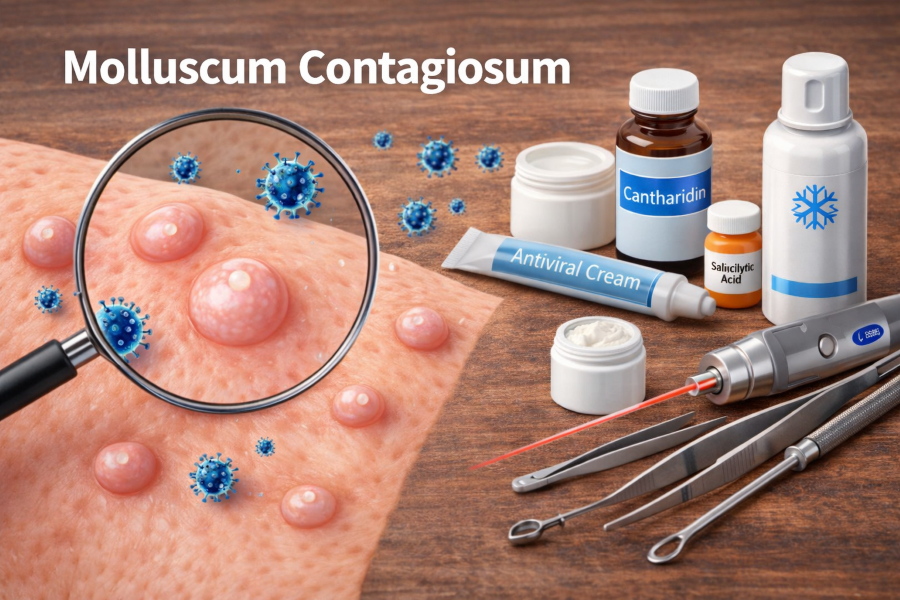
A Complete Guide to Molluscum Contagiosum & Treatment Options
Learn what molluscum contagiosum is, how it spreads, and the most common treatment options. A clear, practical guide for children and adults.
Hello!
Today, we’re talking about a skin condition that many people hear about for the first time only after they or their child develop it—Molluscum Contagiosum.
The name sounds intimidating, and at first glance the bumps can be concerning.
But once you understand what it is and how it behaves, you’ll find that it’s often manageable with the right approach and a bit of patience.
Let’s take a closer look.
What Is Molluscum Contagiosum?
Molluscum Contagiosum is a viral skin infection caused by a poxvirus.
Its most recognizable feature is the appearance of small, dome-shaped bumps on the skin.
These bumps may:
- Have a smooth, firm surface
- Appear skin-colored, pink, or pearly
- Show a small indentation or white core in the center
In some cases, they are subtle and easy to miss at first.
Because the virus spreads through direct skin-to-skin contact, molluscum is most common in children—but adults can develop it as well.
It can also spread through shared objects, such as towels, clothing, toys, gym equipment, or bedding.
Do You Need Treatment?
One important thing to know is that molluscum contagiosum is often self-limiting.
This means the bumps may disappear on their own over time—anywhere from a few months to a couple of years.
However, treatment is often considered for several reasons:
- To prevent the lesions from spreading to other areas
- To reduce itching, irritation, or secondary infection
- To address cosmetic or emotional concerns, especially when lesions appear on visible areas
Treatment is more commonly recommended when:
- Children repeatedly scratch the lesions, increasing the risk of infection
- People with weakened immune systems experience larger or more widespread lesions
- Adults develop lesions on the face, neck, hands, or other exposed areas
Treatment Options
1. Physical Removal Procedures
These methods focus on directly removing the lesions.
Cryotherapy (Freezing Treatment)
Liquid nitrogen is used to freeze the bumps.
The procedure is quick and effective, though mild discomfort may occur.
Benefit: Rapid removal and reduced spread.
Curettage
The lesion is carefully scraped off, usually under local anesthesia.
This method is effective but may carry a small risk of scarring.
Benefit: Immediate and complete lesion removal.
Laser Therapy
A focused laser is used to destroy the lesion.
This option is often chosen for sensitive or visible areas such as the face.
Benefit: Precision treatment with minimal scarring.
2. Topical (Medication-Based) Treatments
Topical therapies are commonly used when lesions are numerous or when physical removal is not ideal.
- Cantharidin
Applied in a clinical setting, this causes a blister to form and helps the lesion resolve naturally. - Salicylic Acid
Gradually weakens the outer layer of the lesion, helping it shrink over time. - Imiquimod
Stimulates the immune system to respond to the virus.
Often considered in cases involving immune compromise. - Antiviral Creams
May help slow viral activity and limit spread.
Natural Resolution vs. Active Treatment
Because molluscum contagiosum can resolve on its own, some people choose to wait.
However, during that time:
- Lesions may spread
- Scratching can lead to secondary bacterial infection
- The virus can be transmitted to others
👉 If lesions are increasing, persistent, or causing discomfort, active treatment may help shorten the course and reduce complications.
Aftercare and Prevention Tips
Maintain Good Hygiene
- Avoid scratching or picking at lesions
- Wash hands frequently
- Use separate towels, clothing, and bedding
Understand Recurrence
Because molluscum is viral, reinfection is possible—especially when immune defenses are low.
Support Overall Skin & Immune Health
Adequate sleep, balanced nutrition, regular physical activity, and stress management can support recovery.
Frequently Asked Questions
Is molluscum contagiosum highly contagious?
Yes. It spreads easily through direct contact and shared items.
Do children always need treatment?
Not always, but treatment is often recommended because children tend to scratch, which increases spread.
Will treatment leave scars?
Some procedures may carry a small risk of scarring, but proper aftercare can minimize this.
Final Thoughts
Molluscum contagiosum may sound alarming at first, but it is usually a manageable and temporary skin condition.
The key is to:
- Understand how it spreads
- Practice good hygiene
- Choose treatment when it’s appropriate
With the right approach, most people see improvement without long-term issues.
If you found this guide helpful, feel free to leave a comment or share your experience.
More skin health topics coming soon!