

💊 Folinic Acid (Leucovorin): A Trusted Ally in Modern Medicine

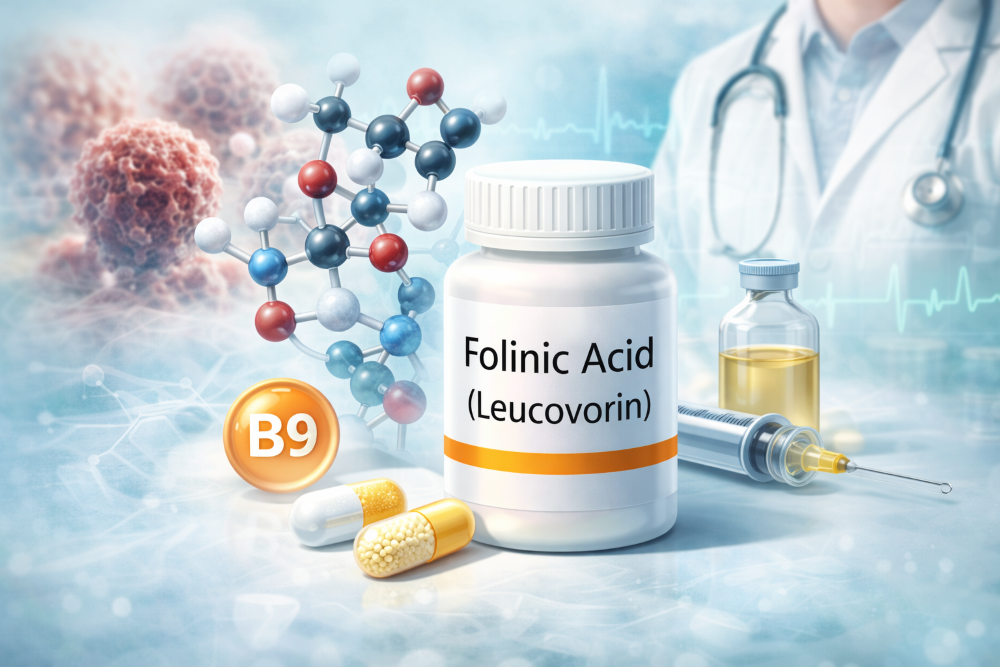
From Cancer Therapy Support to Folate Metabolism—What You Should Know
Folinic acid (leucovorin) is an active form of vitamin B9 used in cancer therapy, folate metabolism, and methotrexate rescue. Learn how it works and when it’s used.
Folinic acid, also known as leucovorin, is often mentioned alongside folic acid, but the two are not the same.
While both are related to vitamin B9, folinic acid is an already active (reduced) form of folate, meaning the body can use it immediately without additional metabolic steps.
Because of this unique property, folinic acid plays a critical medical role, especially in oncology and specific folate-related conditions.
🔬 What Is Folinic Acid (Leucovorin)?
Folinic acid is a reduced form of folate that bypasses the need for enzymatic activation.
This makes it particularly useful when normal folate metabolism is impaired or intentionally blocked by certain medications.
Unlike dietary supplements, leucovorin is often used as a prescription medication under medical supervision.
1️⃣ A Key Partner in Cancer Treatment
✔ Leucovorin Rescue After Methotrexate Therapy
Methotrexate (MTX) is widely used in cancer treatment and autoimmune diseases.
However, it blocks folate metabolism in both cancer cells and healthy cells, which can lead to serious side effects.
Folinic acid helps by:
- Supplying folate to healthy cells
- Reducing toxic effects such as bone marrow suppression, mouth sores, and gastrointestinal injury
- Allowing methotrexate to maintain its therapeutic effect against cancer cells
This strategy is known as leucovorin rescue therapy and is a well-established standard in oncology.
In clinical practice, the dose and timing of leucovorin after methotrexate are carefully controlled to ensure safety and effectiveness.
✔ Enhancing the Effect of 5-Fluorouracil (5-FU)
In colorectal cancer treatment, folinic acid is commonly used in combination with 5-fluorouracil (5-FU).
- Leucovorin enhances the binding of 5-FU to its target enzyme
- This strengthens the anticancer effect of 5-FU
For this reason, leucovorin is included in standard chemotherapy regimens such as FOLFOX and FOLFIRI.
2️⃣ Folate Deficiency and Megaloblastic Anemia
Folate is essential for red blood cell production.
When folate levels are low, megaloblastic anemia may develop.
Folinic acid may be used when:
- Standard folic acid supplementation is ineffective
- Folate metabolism is impaired by medications or medical conditions
📌 In most routine cases, standard folic acid remains the first-line treatment.
3️⃣ Pregnancy and Folate: An Important Distinction
When it comes to pregnancy and fetal development, clarity is essential.
✔ Folic acid (not folinic acid) is the proven standard for preventing neural tube defects.
While folinic acid may be used in specific medical situations under physician guidance, it is not routinely recommended as a substitute for folic acid in pregnancy.
Pregnant individuals should always follow medical guidance regarding folate supplementation.
4️⃣ Genetic Factors (Including MTHFR): What the Evidence Says
Concerns are often raised about MTHFR gene variants and folate metabolism.
Current scientific evidence shows:
- Most people with MTHFR variants can still process folic acid adequately
- Routine avoidance of folic acid is not medically required for most individuals
In certain clinical contexts, healthcare providers may consider alternative folate forms, but this decision should be personalized and evidence-based.
⚠️ Important Safety Considerations
Folinic acid is not a simple vitamin supplement and should be used with care.
Key points to remember:
- It is not appropriate for treating vitamin B12 deficiency, as it may mask symptoms while neurological damage progresses
- Dosage and timing are crucial when used with chemotherapy
- Possible side effects include allergic reactions and gastrointestinal discomfort
👉 Never self-medicate with leucovorin. Always consult a healthcare professional.
📝 Final Thoughts
Folinic acid (leucovorin) is far more than a nutritional supplement.
It is a medically validated support agent that:
- Reduces toxicity in certain cancer treatments
- Enhances the effectiveness of specific chemotherapy drugs
- Supports folate-dependent processes when standard pathways are compromised
If you or a loved one is undergoing cancer therapy or has complex folate-related medical needs, discussing folinic acid with a healthcare provider may be appropriate.
⚠️ Medical Disclaimer
This article is intended for general informational purposes only and does not replace professional medical advice, diagnosis, or treatment.
Medication use and health decisions should always be made in consultation with a qualified healthcare professional.