

Korean Beef Rice Cake Soup (Tteokguk): How It’s Made and What It Means in Korean Tradition

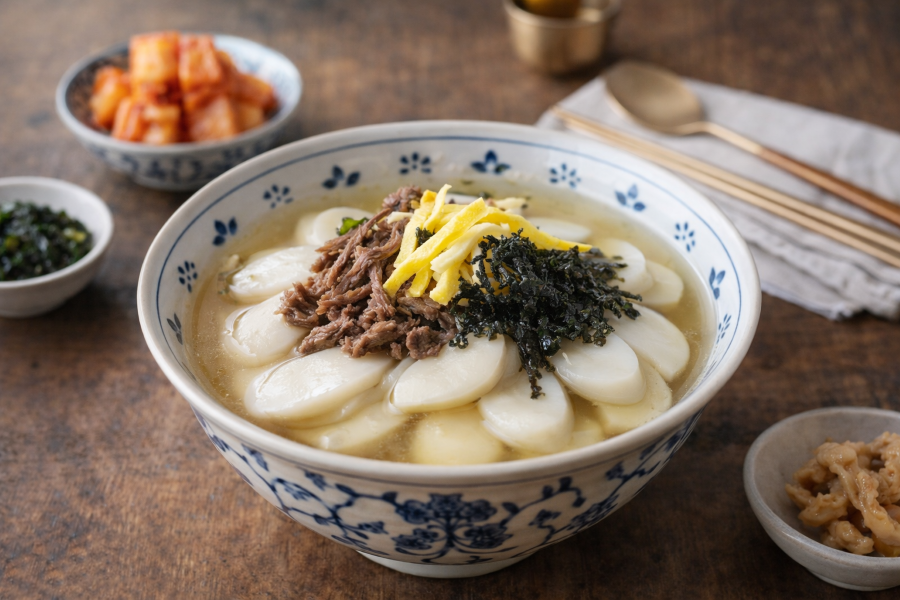
Learn how to make Korean rice cake soup (tteokguk) with a cute illustrated guide. Discover its traditional meaning and step-by-step recipe.
In Korea, tteokguk, or rice cake soup, is much more than a simple dish.
Traditionally eaten on Seollal (Korean Lunar New Year), beef rice cake soup represents renewal, growth, and good fortune for the year ahead.
For generations, families have gathered around a warm bowl of tteokguk to mark a fresh beginning—both physically and symbolically.
The Cultural Meaning of Tteokguk
“You age one year by eating tteokguk”
In Korean culture, there is a well-known saying:
“You become one year older after eating tteokguk.”
This reflects more than just counting age. It symbolizes:
- Entering a new stage of life
- Sharing time with family
- Respecting tradition and continuity
Eating tteokguk on New Year’s Day represents stepping forward into a new year with gratitude and intention.
The Symbolism of White Rice Cakes
The rice cakes used in tteokguk are made from garaetteok, long cylindrical white rice cakes.
Each element carries meaning:
- White color → purity, cleanliness, and a fresh start
- Long shape → long life and prosperity
- Thin oval slices → old Korean coins, symbolizing wealth and abundance
Together, they express a wish for a long, healthy, and prosperous life.
Why Beef Broth Matters
In the past, beef was considered a luxury ingredient in Korea.
Using beef to make the broth showed respect for the occasion and for one’s ancestors.
A clear yet rich beef broth represents:
- Abundance and nourishment
- Strength for the year ahead
- Care and sincerity toward family members
How to Make Traditional Korean Beef Tteokguk
Ingredients (Serves 4)
- 400g sliced rice cakes (tteok)
- 200g beef brisket or shank
- 1.5 liters water
- 1–2 tbsp soy sauce for soup
- 1 tbsp minced garlic
- 1 tbsp sesame oil
- Salt to taste
- 2 eggs
- 1 sheet roasted seaweed (gim)
- 1 green onion
Step-by-Step Instructions
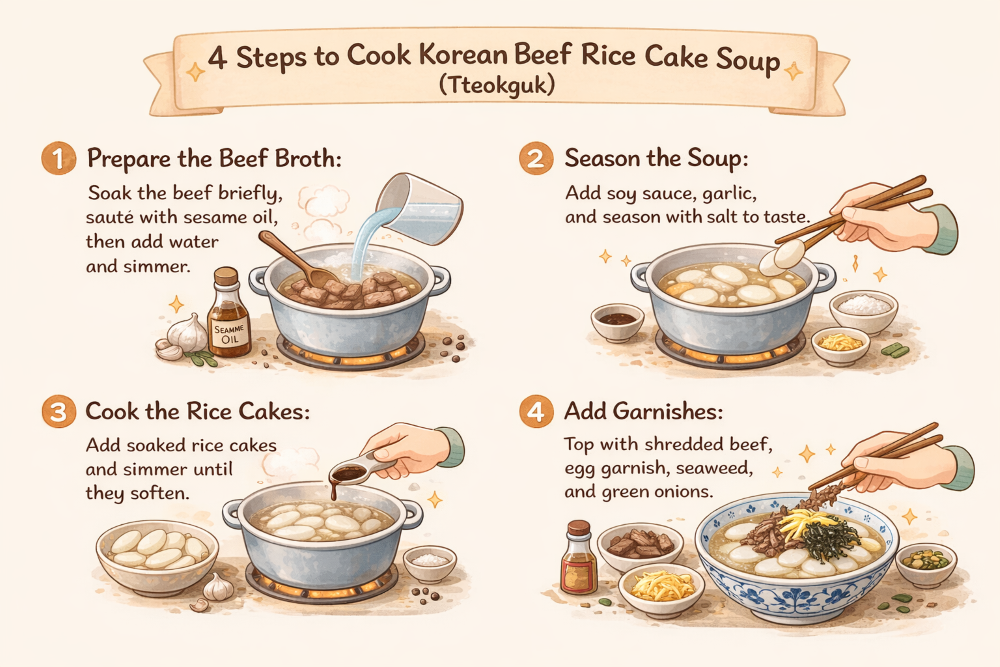
1. Prepare the Beef Broth
- Soak the beef briefly in cold water to remove excess blood.
- Heat sesame oil in a pot and stir-fry the beef until fragrant.
- Add water and simmer for 30–40 minutes until the broth is rich.
- Remove the beef, shred it, and set aside.
2. Season the Soup
- Add soy sauce and minced garlic to the broth.
- Adjust seasoning with salt if needed.
3. Cook the Rice Cakes
- Soak rice cakes in water beforehand.
- Add them to the broth and simmer until they float and turn tender.
4. Add Garnishes
- Make thin egg strips by pan-frying beaten eggs.
- Crush roasted seaweed into small pieces.
- Serve the soup topped with shredded beef, egg garnish, seaweed, and sliced green onion.
Regional and Family Variations
While beef tteokguk is the most common version, variations exist:
- Central Korea: Clear beef broth
- Southern regions: Richer broth, sometimes with anchovy or bone stock
- Northern-style: Tteokmanduguk (rice cake and dumpling soup)
Despite these differences, the shared meaning remains the same—welcoming a new year together.
More Than a Meal
Tteokguk is not just about eating.
It is a moment of reflection, connection, and gratitude.
A single bowl carries:
- Respect for ancestors
- Hope for the future
- Family unity
- Cultural identity passed down through generations
Final Thoughts
Korean beef rice cake soup is a timeless tradition that blends flavor, symbolism, and history into one comforting dish.
When Koreans enjoy tteokguk on New Year’s Day, they are not simply having a meal—they are honoring the past and welcoming the future with intention and warmth.