

Parents’ Day in Korea: A Holiday That Brings Families Closer

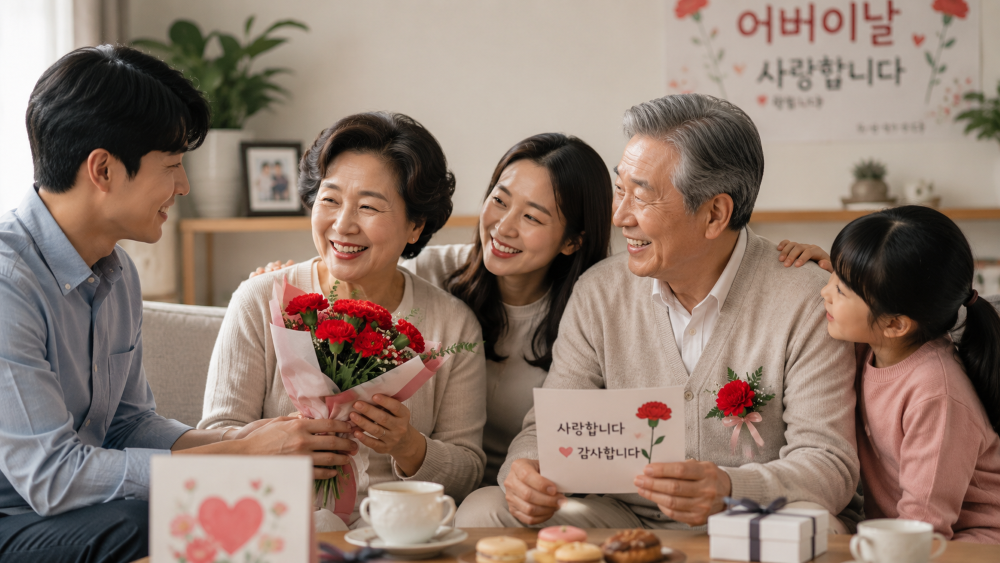
Discover the meaning of Parents’ Day in Korea, celebrated every May 8. Learn about carnations, family traditions, and how Koreans express gratitude to parents.
Every year on May 8, families across the country celebrate Parents’ Day in Korea, one of the most meaningful family holidays in Korean culture.
Unlike holidays centered around large public events, Parents’ Day in Korea feels quieter and more personal.
It’s a day when people pause their busy routines to spend time with their parents, share meals together, and express gratitude that often goes unspoken during everyday life.
Sometimes it’s through flowers.
Sometimes through a short phone call.
And sometimes simply by being there.
But the message is usually the same:
👉 “Thank you.”
🌸 What Is Parents’ Day in Korea?
One unique thing about Parents’ Day in Korea is that Korea does not strongly separate Mother’s Day and Father’s Day the way many Western countries do.
Instead, the country celebrates both parents together on one shared holiday.
That’s why the day feels deeply family-oriented.
It’s less about commercial celebration and more about appreciation, respect, and connection.
For many Koreans, Parents’ Day in Korea is not just another holiday on the calendar—it’s a reminder of family responsibility and gratitude.
🌹 Why Carnations Are Important
If there’s one symbol most connected to Parents’ Day in Korea, it’s the carnation.
Red carnations are traditionally given to parents to represent:
- love
- gratitude
- respect
In early May, flower shops across Korea fill with carnations, and many families prepare bouquets or corsages for their parents.
For older generations especially, carnations carry emotional memories.
Many Koreans still remember making paper carnations at school as children and pinning them onto their parents’ clothes before class ceremonies or family dinners.
👨👩👧👦 How Families Celebrate Parents’ Day in Korea
The way people celebrate Parents’ Day in Korea has changed over time, but some traditions remain consistent.
Common ways families celebrate include:
- having dinner together
- giving flowers or gifts
- offering financial gifts
- writing thank-you messages
- visiting parents in person
In Korean culture, physically visiting parents is often considered meaningful in itself.
Even a short visit can carry emotional weight.
💭 Why the Meaning Changes With Age
For children, Parents’ Day in Korea may feel simple—just another school event or family dinner.
But as people get older, the holiday often feels different.
They begin noticing things they didn’t see before:
- their parents aging
- sacrifices made quietly over the years
- how quickly time passes
That’s why the holiday can feel emotional, even without grand celebrations.
Sometimes a simple meal together means more than an expensive gift.
🌿 Modern Ways of Celebrating
Today, younger generations celebrate Parents’ Day in Korea in newer ways too.
Some people send:
- video messages
- online gift deliveries
- health supplements
- family travel experiences
The methods may evolve, but the core feeling remains unchanged:
👉 appreciation.
📌 Final Thought
At its heart, Parents’ Day in Korea is about something very simple:
taking time to acknowledge the people who raised you.
In everyday life, people are often too busy to express those feelings openly.
That’s why this holiday matters.
It creates space for words people don’t always say enough:
- “Thank you.”
- “Please stay healthy.”
- “I appreciate you.”
And sometimes, those simple words matter the most.
One-Line Takeaway
👉 Parents’ Day in Korea is a meaningful holiday that reminds families to slow down, reconnect, and express gratitude to parents.