

Why AI Workplace Accountability Matters More Than Companies Realize

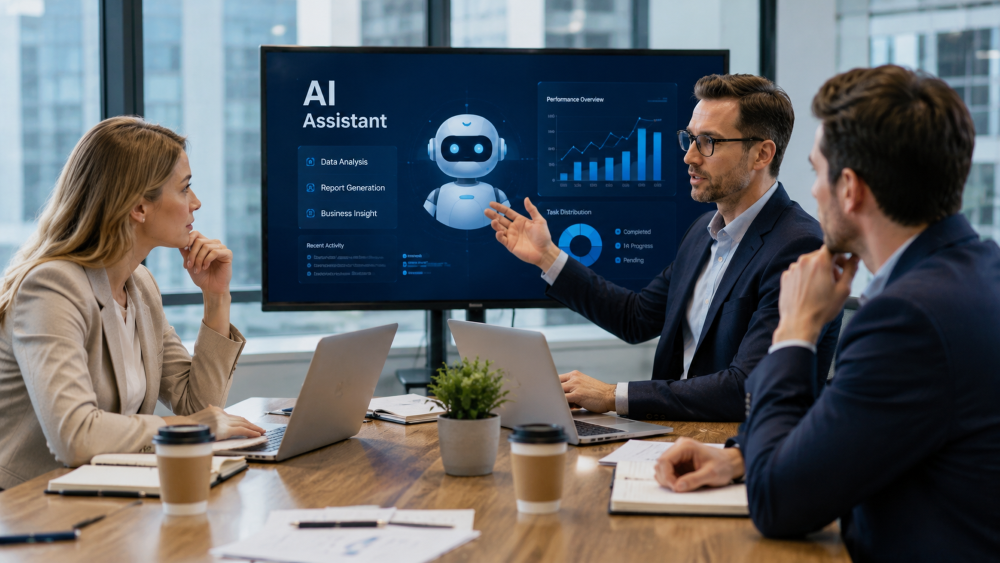
As companies begin treating AI like employees, new risks are emerging. Explore how AI workplace accountability, leadership, and human responsibility are reshaping modern organizations.
AI is becoming part of everyday work faster than most companies expected.
It now appears in meetings, hiring strategies, reports, presentations, and even internal workflows. In many organizations, AI is no longer viewed as just another software tool—it’s starting to feel like part of the team itself.
And that’s where an important issue begins to emerge:
👉 AI workplace accountability
Recently, more companies have started using expressions like:
- “AI employee”
- “AI teammate”
- “Digital coworker”
At first, these phrases sound harmless. In fact, they often make AI adoption feel more approachable and modern.
But recent research suggests something surprising:
👉 The more organizations treat AI like a human employee, the more human accountability inside the workplace may begin to weaken.
At first glance, that idea feels exaggerated.
But when you think about how people actually behave at work, it starts to make sense.
When AI Stops Feeling Like a Tool
Imagine an employee using AI to prepare a business report.
In the past, the employee likely would have reviewed the document carefully before submitting it. After all, their name—and reputation—were attached to the final result.
But once AI starts being treated like a “team member,” the language changes.
People begin saying things like:
- “That’s what the AI recommended.”
- “The AI analysis said this was correct.”
These statements are not necessarily wrong.
The problem is subtler than that.
👉 The boundary of responsibility slowly becomes less clear.
The work is still delivered by a person, but psychologically, part of the responsibility begins shifting toward the AI system.
That shift is exactly why AI workplace accountability is becoming such an important leadership issue.
Why People Trust AI Too Easily
Another surprising part of the research is how quickly people begin trusting AI-generated output.
The reality is that AI still makes mistakes frequently—especially in areas involving judgment, context, and real-world nuance.
Yet when AI produces something polished and well-structured, people often assume it must be accurate.
Perhaps it’s because the output sounds confident.
Or because the formatting feels professional.
But over time, this changes workplace behavior.
Things employees once double-checked now get accepted much more quickly.
And when that pattern repeats across an organization, overall decision quality can gradually weaken.
This is one of the hidden risks behind poor AI workplace accountability structures.
Employee Anxiety Doesn’t Disappear
Many companies try to reduce fear by presenting AI in a friendly way.
“AI is here to help.”
“Think of it as your digital partner.”
But employees often experience something much more complicated.
Questions begin to surface:
- “What happens to my role now?”
- “Will AI eventually replace part of my job?”
- “What makes my contribution uniquely valuable?”
These concerns are especially real for workers whose jobs involve repetitive tasks.
And this is why leadership matters.
Because AI adoption is not just a technology transition.
👉 It’s a psychological transition too.
The Real Challenge Is Accountability
Personally, I think companies are asking the wrong question.
Most organizations focus on:
👉 “Which AI tools should we adopt?”
But the more important question may be:
👉 “How do we preserve human accountability inside AI-driven systems?”
That is the real leadership challenge.
AI is already extremely useful for:
- summarizing information
- organizing ideas
- automating repetitive work
- improving efficiency
And its capabilities will continue growing rapidly.
But no matter how advanced AI becomes, it still cannot take responsibility for outcomes.
Organizations are still fundamentally human systems.
And that means accountability must remain human as well.
Why Human Judgment May Become More Important
Over the next few years, AI will likely become deeply embedded in almost every workplace.
Ironically, that may make human judgment even more valuable—not less.
Because the more organizations rely on AI, the more important these questions become:
👉 Who makes the final decision?
👉 Who reviews the output?
👉 Who is accountable when something goes wrong?
Without clear answers, organizations risk creating environments where responsibility slowly disappears into the system itself.
And once accountability becomes unclear, trust inside the workplace begins to weaken.
Final Thought
Technology changes quickly.
Human responsibility should not.
AI can support work, improve productivity, and help organizations move faster.
But AI workplace accountability still depends on people who are willing to think carefully, review critically, and take ownership of decisions.
Because in the end,
👉 AI may assist the work—but humans still carry the responsibility.