

Airplane Ear: Why Your Ears Hurt on a Plane and What Actually Helps

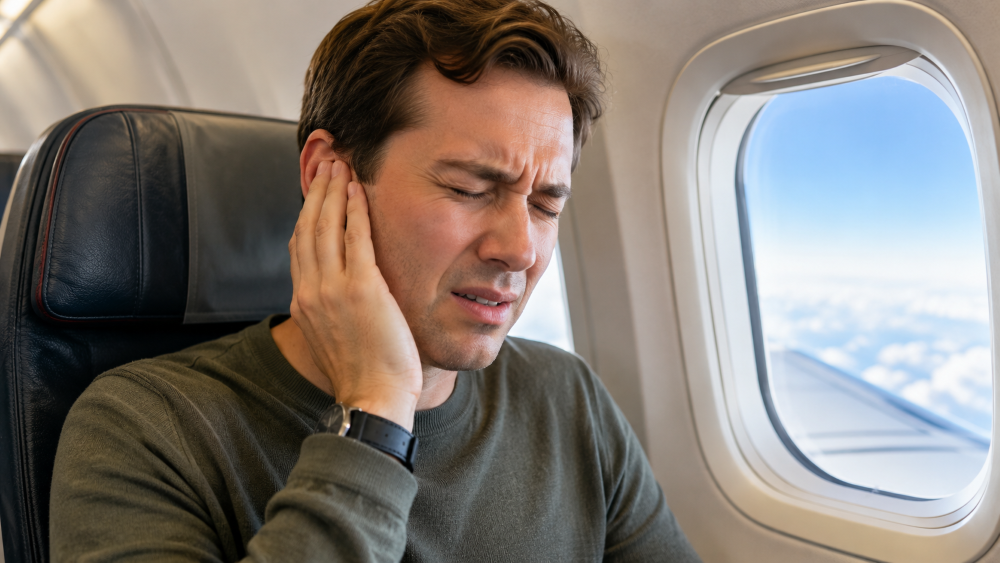
Learn why airplane ear causes pain during flights and discover simple ways to relieve ear pressure, including chewing gum, yawning, earplugs, and gentle pressure techniques.
Have you ever felt sharp ear pain or intense pressure during a flight, especially when the plane is taking off or landing? This common problem is often called airplane ear. It can feel like your ears are clogged, stretched, or about to “pop,” and in some cases, the discomfort may continue even after the flight.
The good news is that airplane ear is usually temporary and can often be prevented or reduced with a few simple steps. Understanding why it happens is the first step to protecting your ears while flying.
What Is Airplane Ear?
Airplane ear is a condition that happens when the air pressure in your middle ear does not match the air pressure in the airplane cabin. Medically, it is known as ear barotrauma.
Your middle ear is connected to the back of your nose and throat through a small passage called the Eustachian tube. This tube helps equalize pressure on both sides of the eardrum.
During takeoff and landing, cabin pressure changes quickly. If the Eustachian tube does not open properly, pressure can build up behind the eardrum. This can cause ear fullness, muffled hearing, discomfort, or sharp pain.
Why Airplane Ear Often Happens During Landing
Many people notice airplane ear most strongly when the plane is descending. During landing, cabin pressure increases, and your ears must adjust quickly.
If your Eustachian tubes are working well, your ears may simply “pop” and feel normal again. But if you have a cold, allergies, sinus congestion, or an ear infection, the tubes may be blocked or swollen. This makes it harder for pressure to equalize.
That is why flying with nasal congestion can make airplane ear much worse.
Can Pressure-Regulating Earplugs Help Airplane Ear?
Pressure-regulating flight earplugs may help reduce airplane ear symptoms for some travelers.
These earplugs are different from ordinary foam earplugs. Regular earplugs mainly block noise, while pressure-regulating earplugs contain small filters designed to slow the pressure changes reaching the eardrum.
They do not completely prevent airplane ear, especially if you are severely congested. However, if you often experience ear pain during flights, using flight earplugs during takeoff and landing may be worth trying.
Simple Ways to Relieve Airplane Ear
There are several practical steps that may help relieve or prevent airplane ear during a flight.
1. Swallow Often
Swallowing helps open the Eustachian tubes. Drinking water during takeoff and landing can help your ears adjust to pressure changes.
2. Chew Gum or Suck on Candy
Chewing gum or sucking on candy encourages frequent swallowing. This is one of the simplest ways to reduce airplane ear discomfort.
3. Yawn During Takeoff and Landing
Yawning activates the muscles that help open the Eustachian tubes. If your ears feel clogged, try yawning slowly and repeatedly.
4. Use the Valsalva Maneuver Gently
Pinch your nose, close your mouth, and gently blow as if you are trying to blow your nose. This may help equalize pressure in the ears.
Do not blow too hard. A gentle approach is important because too much force may irritate or injure the ear.
5. Stay Awake During Descent
Airplane ear often becomes worse during landing. Staying awake during descent allows you to swallow, yawn, chew gum, or use gentle pressure-equalizing techniques before the pain becomes severe.
6. Manage Congestion Before Flying
If you have a cold, allergies, or sinus congestion, your risk of airplane ear may be higher. Managing congestion before the flight may help.
Some travelers use nasal sprays or decongestants before flying, but these products are not safe or appropriate for everyone. If you have high blood pressure, heart disease, are pregnant, or take regular medication, ask a doctor or pharmacist before using them.
When Airplane Ear Needs Medical Attention
Mild airplane ear often improves on its own after landing. However, you should consider seeing a healthcare professional if you experience:
- Ear pain that lasts more than 24 hours
- Significant or ongoing hearing loss
- Fluid or blood coming from the ear
- Severe dizziness or vertigo
- Repeated airplane ear on multiple flights
In rare cases, pressure changes during flying can cause fluid buildup, middle ear problems, or eardrum injury. If symptoms are severe or do not improve, it is best to have your ears checked.
Final Thoughts on Airplane Ear
Airplane ear happens when your ears struggle to adjust to rapid air pressure changes during a flight. It is common, especially during landing, but simple steps can often make a big difference.
Chewing gum, swallowing, yawning, using pressure-regulating earplugs, and gently performing the Valsalva maneuver may help reduce ear pressure and pain. If you are congested before flying, take extra care and consider speaking with a healthcare professional.
Airplane ear is usually not serious, but repeated or long-lasting symptoms should not be ignored. Your hearing is worth protecting.