

The Best Test to Measure Your Diabetes Risk: Why HbA1c Matters

Discover why the HbA1c test is the best way to assess diabetes risk, understand blood sugar trends, and identify prediabetes early.
When people think about blood sugar tests, they often picture a single number taken after fasting or a meal.
But blood sugar doesn’t exist in a snapshot — it’s a pattern over time.
That’s why many doctors in the United States consider the HbA1c test the most reliable way to understand long-term diabetes risk.
What Is the HbA1c Test?
The HbA1c test (also called A1c) measures your average blood sugar levels over the past 2–3 months.
Instead of capturing how your blood sugar looks on one specific day, it reflects how consistently high or stable it has been over time.
This makes it especially useful for:
- Detecting early diabetes risk
- Identifying prediabetes
- Monitoring long-term blood sugar control
How HbA1c Works (In Simple Terms)
Red blood cells live for about 120 days.
When blood sugar is high, glucose sticks to hemoglobin inside these cells.
The HbA1c test measures how much sugar has attached — giving doctors a clear picture of your recent blood sugar history.
The higher the percentage, the higher your average blood sugar has been.
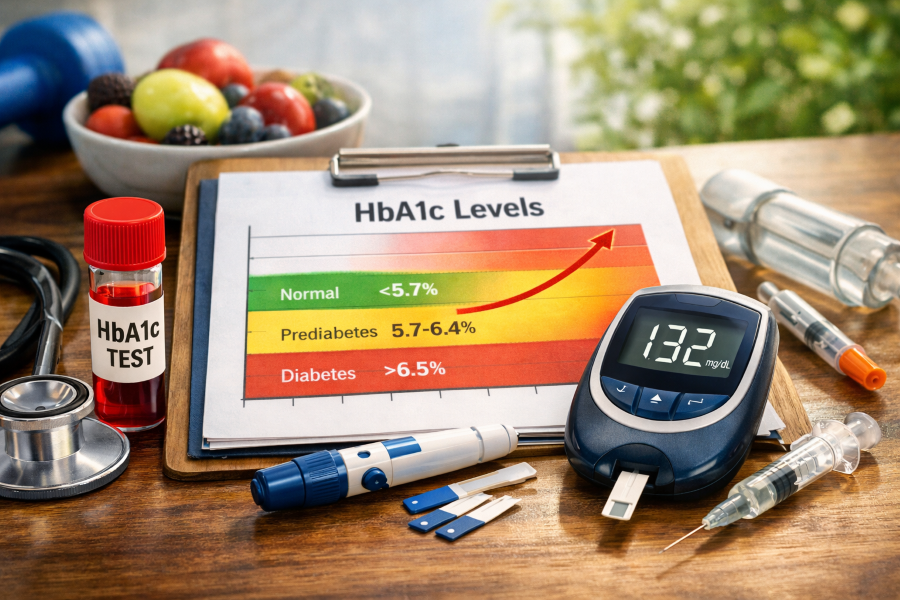
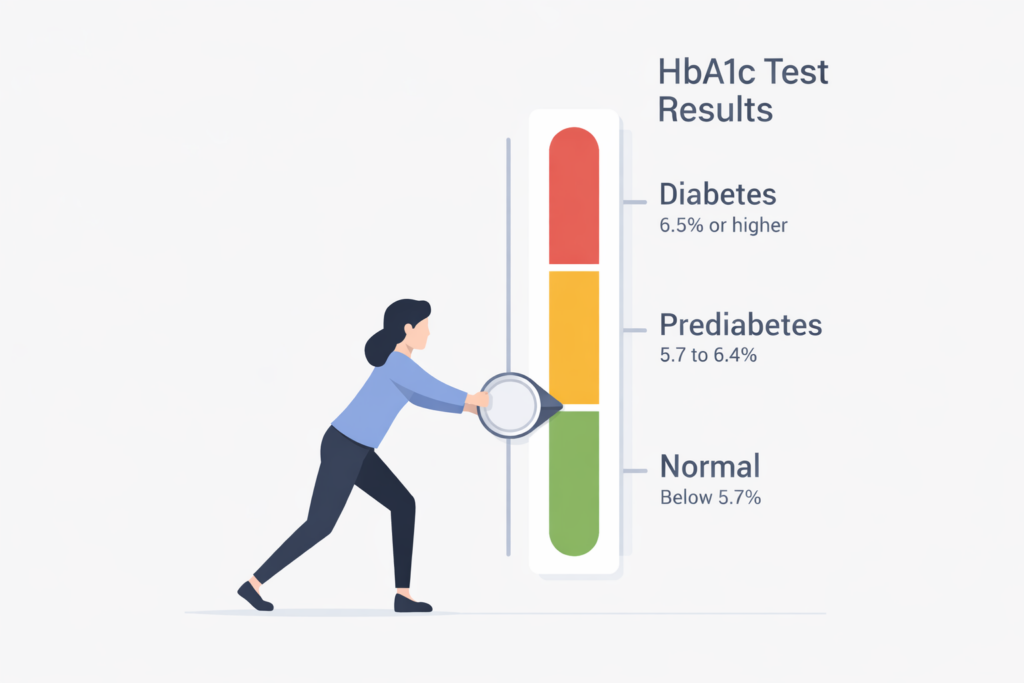
Understanding Your HbA1c Results
In the U.S., these are the commonly used ranges:
- Below 5.7%
→ Normal - 5.7%–6.4%
→ Prediabetes
(This is a critical window for prevention.) - 6.5% or higher
→ Diabetes (one of the diagnostic criteria)
Many people are surprised to learn they are in the prediabetes range — often without any symptoms at all.
Why HbA1c Is Especially Important in the U.S.
Lifestyle factors common in the U.S. can quietly raise blood sugar over time:
- High intake of refined carbohydrates and sugary drinks
- Frequent dining out
- Sedentary work routines
- Chronic stress and poor sleep
Because of this, it’s possible to have:
- Normal fasting glucose
but - Elevated HbA1c
This is why U.S. physicians frequently order HbA1c tests during annual checkups, especially for adults over 40 or those with risk factors.
Who Should Consider an HbA1c Test?
You may want to discuss HbA1c testing with your healthcare provider if you:
- Have a family history of diabetes
- Carry excess weight around the abdomen
- Feel unusually tired after meals
- Notice slow wound healing
- Have been told your blood sugar is “borderline”
- Want a clearer picture of your long-term metabolic health
Even without symptoms, the test can provide valuable early insight.
What If Your HbA1c Is Borderline?
If your result falls in the prediabetes range, medication is often not the first step.
Doctors typically recommend:
- Adjusting diet (especially refined carbs and sugar)
- Increasing physical activity
- Losing 3–5% of body weight
- Rechecking HbA1c in 3–6 months
Many people are able to bring their numbers back into the normal range with consistent lifestyle changes.
Is the HbA1c Test Widely Available in the U.S.?
Yes.
HbA1c testing is:
- Routinely offered at clinics and hospitals
- Covered by most health insurance plans
- Included in many preventive health screenings
- Available through primary care providers and endocrinologists
The test does not require fasting, which makes it convenient for many patients.
Final Thoughts
The HbA1c test doesn’t just tell you whether you have diabetes —
it shows where your health is heading.
It’s a powerful tool for early awareness, prevention, and long-term planning.
If you’ve ever wondered whether your blood sugar tells the whole story, HbA1c may be the missing piece.
Early knowledge creates options — and options create better outcomes.
Medical Disclaimer
The information provided in this article is for educational and informational purposes only and is not intended as medical advice, diagnosis, or treatment.
Always seek the advice of a qualified healthcare provider with any questions you may have regarding a medical condition or before starting, stopping, or changing any medication, supplement, or treatment plan.
Do not disregard professional medical advice or delay seeking medical care because of information you have read on this website.
The author and publisher of this content are not responsible for any adverse effects or consequences resulting from the use or misuse of the information presented.
Individual health conditions and responses to treatments may vary.
Medical decisions should be made in consultation with a licensed healthcare professional.