

Why Foreign Visitors Love the National Museum of Korea

An Analysis Based on International Visitor Reviews
Based on international visitor reviews, this article explores why the National Museum of Korea is considered one of Asia’s most welcoming and insightful museums.
National Museum of Korea is frequently described by international visitors as “one of the best museums in Asia”—and often, “unexpectedly so.”
Across travel blogs, Google reviews, TripAdvisor posts, and expat forums, foreign visitors repeat similar impressions, even when they arrive with little prior knowledge of Korean history.
What makes this museum stand out is not just its size or collection, but how it makes Korea understandable, approachable, and memorable to non-Korean audiences.
1. “It’s Massive, Yet Calm” — A Repeated First Impression
One of the most common observations in foreign reviews is the contrast between scale and atmosphere.
Visitors often write that they expected:
- a formal, intimidating national museum
- crowded halls and dense explanations
Instead, they describe:
- wide, uncluttered galleries
- intuitive layouts
- a sense of calm rather than pressure
For many foreigners, especially those used to the Louvre or the British Museum, this balance feels refreshing. The museum does not overwhelm; it invites.
2. Clear Historical Flow Without Prior Knowledge
A recurring theme in reviews is how easily visitors can follow Korea’s history—even if they knew very little beforehand.
Foreign visitors frequently note that:
- the chronological layout is easy to understand
- history feels continuous rather than fragmented
- politics, religion, daily life, and art are shown together
As one common sentiment goes:
“I finally understood how Korea became modern without losing its roots.”
The museum functions less like an archive and more like a well-structured narrative.
3. English Explanations That Actually Explain
Many international visitors are surprised by the quality of English interpretation.
Rather than literal translations, the museum provides:
- cultural context
- comparisons to Western concepts
- explanations of why an object matters
Foreign reviews often mention relief at not needing to constantly search online while walking through exhibits.
This reduces cognitive fatigue and allows visitors to stay immersed.
4. Discovering a Different Kind of Beauty
Another frequent observation is the distinct aesthetic of Korean artifacts.
Visitors often contrast Korea with neighboring cultures:
- China is described as grand and monumental
- Japan as precise and refined
- Korea as restrained, balanced, and quietly elegant
The museum’s presentation reinforces this perception by avoiding excessive lighting or dramatic staging.
The result is an encounter with a cultural identity that feels confident without being loud.
5. A Museum That Feels Designed for Today’s Travelers
Foreign reviewers also consistently mention the museum’s modern sensibility.
They highlight:
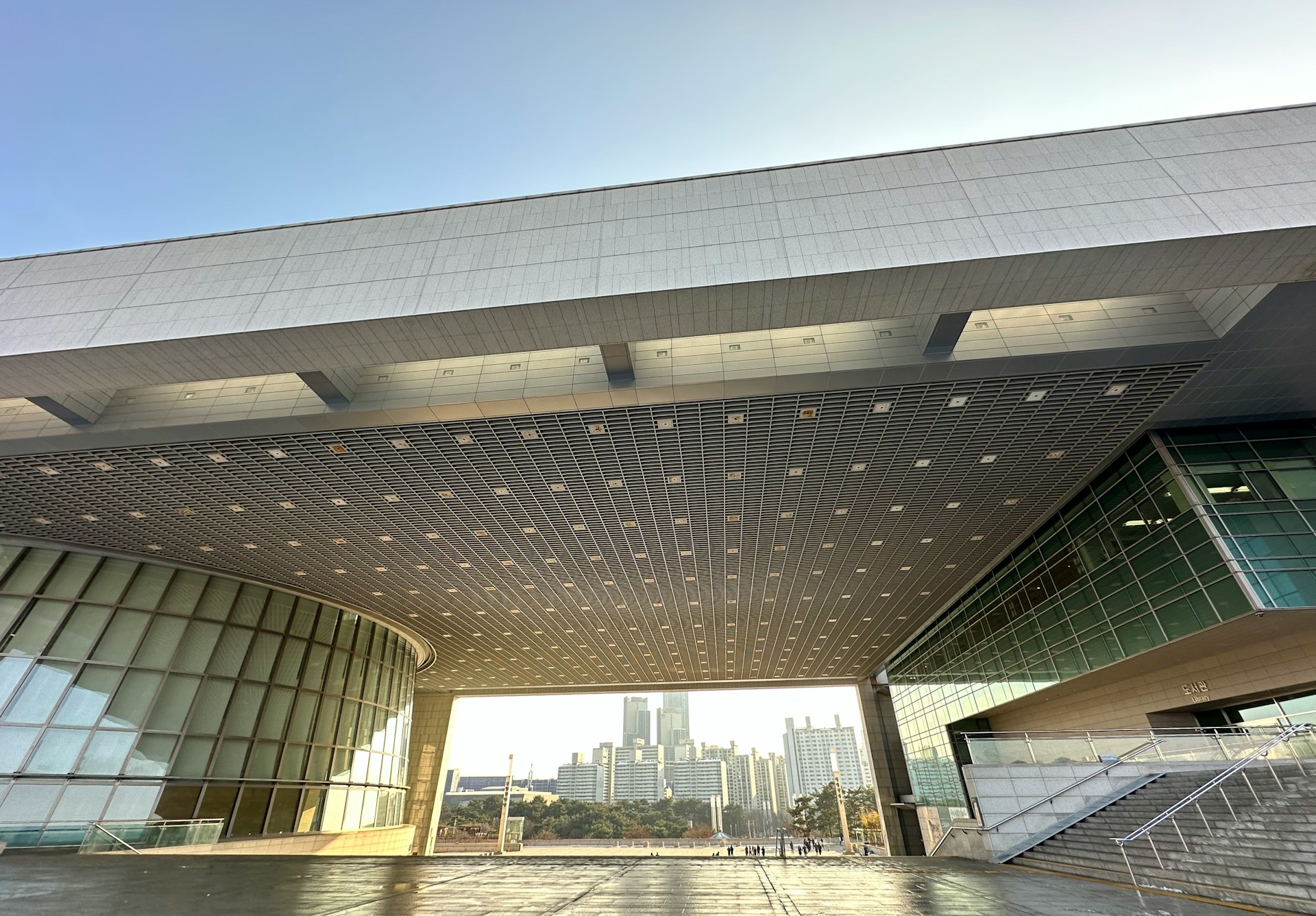
- natural light and open architecture
- spaces that feel comfortable for photography
- areas to rest, reflect, and walk at one’s own pace
As a result, the museum appears frequently in:
- Instagram travel posts
- YouTube vlogs
- long-form travel blogs
Many visitors note that they came after seeing photos—proof that the museum communicates visually as well as intellectually.
6. “And It’s Free?” — A Moment of Cultural Surprise
Perhaps the most striking reaction in foreign reviews is disbelief at the entrance fee.
Visitors often express shock that:
- permanent exhibitions are free
- facilities are well-maintained
- staff support and signage are extensive
For many, this becomes a moment of cultural insight:
“Korea treats culture as a public good.”
This detail significantly elevates overall satisfaction and reinforces positive impressions of the country.
7. More Than a Museum — A Starting Point for Understanding Korea
Across platforms, one recommendation appears again and again:
“If you want to understand Korea, start here.”
Foreign visitors describe leaving the museum not just informed, but curious—wanting to explore palaces, temples, food, and neighborhoods with a deeper sense of context.
In this way, the National Museum of Korea serves as a gateway, not a destination alone.
Conclusion: A Museum That Explains Without Showing Off
Based on foreign visitor reviews, the reason the National Museum of Korea is so well loved is simple but rare:
It explains Korea without exaggeration,
teaches history without intimidation,
and presents culture without spectacle.
For international audiences, this balance is what transforms a national museum into a place of genuine connection.