

AI in the Workplace 2026: Why Human Judgment Matters Most

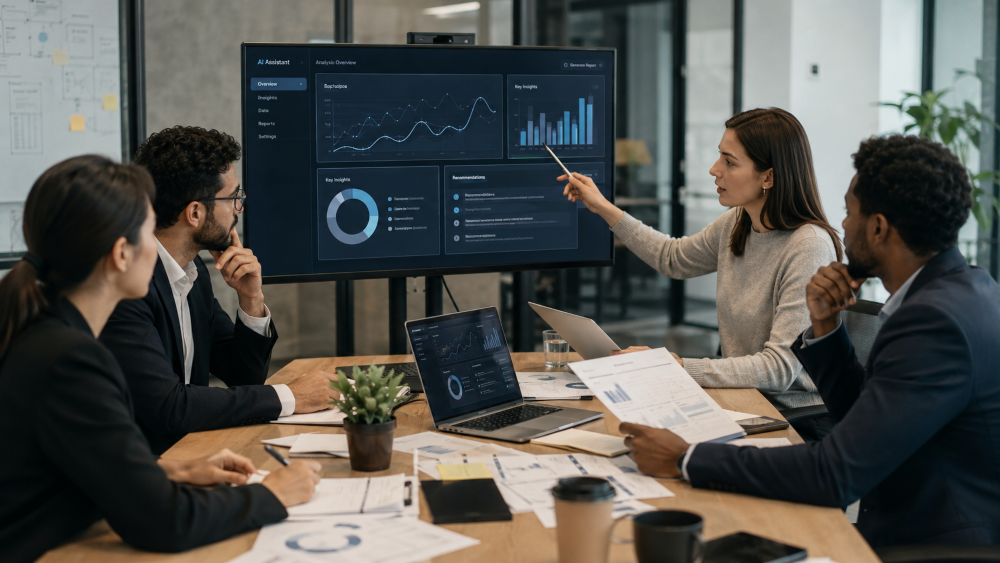
AI in the workplace is now common, but the best organizations are not the ones using the most tools. They are the ones protecting human judgment, critical thinking, and AI governance.
AI in the workplace is no longer a future trend. In 2026, it is already part of daily organizational life. Teams use generative AI to draft reports, summarize meetings, analyze data, write marketing copy, answer internal questions, and speed up routine knowledge work.
But the most important question is not whether an organization uses AI.
The real question is this:
Is AI making the organization smarter, or is it quietly weakening the human judgment the organization depends on?
The same AI tool can produce completely different results in different organizations. In one company, AI helps employees think faster, test ideas, and improve decisions. In another, AI creates shallow work, unchecked assumptions, and growing dependency.
The difference comes down to judgment.
AI in the Workplace Is Now Common, but Good Judgment Is Still Rare
Imagine a team that uses AI to create a strategy report in ten minutes. The report looks polished. The structure is clear. The language sounds confident. Everyone feels productive.
Then someone checks the details.
The market data is outdated. The assumptions are weak. The recommendation does not fit the company’s actual situation. What looked like efficiency now becomes extra work.
This is one of the biggest risks of AI in the workplace. AI can make work look finished before the thinking is actually complete.
Generative AI is excellent at producing first drafts. It can organize information, generate options, summarize long documents, and reduce the friction of starting from a blank page. These are real benefits.
But faster output is not the same as better thinking.
Organizations that use AI well understand this. They treat AI as an assistant to human judgment, not as a replacement for it.
The Productivity Paradox of AI in the Workplace
AI promises productivity, and in many ways it delivers it. A meeting summary that once took 30 minutes can now be produced in seconds. A marketing outline can be drafted almost instantly. A data analyst can explore patterns faster. A manager can write clearer communication with less effort.
These gains are valuable.
But there is a hidden risk. When producing work becomes easier, organizations may start confusing more output with better work.
More reports do not automatically mean better decisions.
More slide decks do not automatically mean stronger strategy.
More emails do not automatically mean clearer communication.
More AI-generated analysis does not automatically mean deeper understanding.
This is the productivity paradox of AI in the workplace.
AI can accelerate work. But unless humans continue to verify, interpret, and challenge the output, the organization may simply move faster in the wrong direction.
Cognitive Offloading: What Are Organizations Really Outsourcing?
Cognitive offloading means shifting mental work to an external tool. This is not new. People have always used tools to extend their thinking. Writing, calculators, spreadsheets, and search engines are all forms of cognitive offloading.
So the problem is not that people use tools.
The problem is what happens when the tool begins to replace the thinking process itself.
When AI drafts the first version of a report, does the employee use the saved time to think more deeply? Or does the employee simply accept the draft and move on?
When AI summarizes a meeting, does the manager check whether the summary captured the real tension in the conversation? Or does the AI summary become the official record without review?
When AI generates a recommendation, does the team test the assumptions? Or does the confident tone create the illusion that the reasoning is stronger than it is?
Research on AI tools and critical thinking suggests that organizations should take this seriously. Studies have found a connection between frequent AI use, cognitive offloading, and lower critical thinking performance. This does not mean AI automatically causes weaker thinking. Correlation is not the same as causation.
But it does suggest a clear warning:
If AI does the thinking too often, people may stop practicing the thinking they still need.
The Rise of Workslop: Polished Output, Weak Thinking
One of the clearest risks of AI in the workplace is the rise of “workslop.”
Workslop is AI-generated work that looks professional but lacks the depth, accuracy, or context needed to move a task forward.
It may be a memo that sounds strategic but says very little.
It may be a report with smooth language but weak evidence.
It may be a slide deck that looks complete but avoids the hard question.
It may be a summary that misses the most important nuance.
It may be a recommendation that sounds confident but does not fit the organization’s reality.
The danger of workslop is that it does not always look bad. In fact, it often looks good at first glance.
That is what makes it costly.
Someone else eventually has to check it, correct it, rewrite it, or explain why it is wrong. The organization saves time at the drafting stage but loses time at the review stage.
Workslop creates hidden costs:
- wasted time,
- reduced trust,
- weaker decisions,
- more rework,
- lower accountability,
- and a false sense of productivity.
Organizations that use AI well do not allow workslop to move through the system unchecked. They build human review into the workflow.
The Confidence Trap: Why AI Output Feels More Reliable Than It Is
AI-generated content often sounds confident. It uses polished language. It organizes ideas neatly. It provides clear answers. This can make the output feel more reliable than it actually is.
This is a major issue for AI in the workplace.
People may trust AI output because it looks professional. This is sometimes called automation bias — the tendency to treat machine-generated output as more authoritative than it deserves to be.
The more confident the AI sounds, the less likely people may be to question it.
That is dangerous.
AI can produce a clear answer to a poorly framed question. It can generate a strategy without understanding the company’s culture. It can summarize information without knowing what matters most. It can make unsupported claims sound reasonable.
This is why organizations need review habits.
Before using AI output, employees should ask:
- Is this accurate?
- What assumptions are being made?
- What evidence is missing?
- Does this fit our specific context?
- What would an expert challenge?
- What decision will be made from this output?
- Who is accountable if this is wrong?
These questions keep human judgment in the loop.
Without them, AI in the workplace becomes less like an assistant and more like an unverified decision engine.
AI Training Is Not Enough: Organizations Need AI Literacy
Many organizations have adopted AI tools faster than they have built the training, policies, and culture needed to use them well.
This gap matters.
Tool training teaches employees how to use AI. AI literacy teaches employees how to question AI.
There is a difference.
AI literacy includes understanding:
- when AI is useful,
- when AI is risky,
- how AI fails,
- how to verify AI output,
- how to protect sensitive data,
- how to avoid overreliance,
- how to detect weak reasoning,
- and how to remain accountable for final decisions.
Organizations that use AI well do not simply give employees access to tools. They teach employees how to think with those tools.
This is one of the most important differences in AI in the workplace today.
The best organizations are not just increasing AI adoption. They are increasing AI judgment.
AI Governance Is Really Judgment Governance
Many companies think of AI governance as a technical issue. It is not only technical. It is a leadership issue.
AI governance is really judgment governance.
It answers practical questions:
- Who can use AI?
- What tasks can AI be used for?
- What data cannot be entered into AI tools?
- When must AI output be reviewed?
- Who owns the final decision?
- What types of work require human-only judgment?
- How are mistakes reported?
- What uses are prohibited?
Without clear answers, AI use becomes informal and inconsistent. One employee may use AI carefully. Another may paste confidential information into a tool. A third may submit AI-generated analysis without checking it.
That is not innovation. That is unmanaged risk.
Good AI governance does not slow down the organization. It protects the organization from moving quickly without understanding where it is going.
Why Junior Employees Need Protected Thinking Space
AI in the workplace creates a special challenge for early-career employees.
Junior employees develop judgment by working through problems. They learn by researching, comparing options, making mistakes, receiving feedback, and gradually building pattern recognition.
If AI removes too much of that struggle too early, young employees may produce better-looking work without developing stronger judgment.
This does not mean junior employees should avoid AI. That would be unrealistic.
But organizations should create protected spaces where employees must think before using AI.
For example:
- ask junior employees to write their own first analysis,
- then compare it with AI output,
- identify where AI was helpful,
- identify where AI was wrong,
- and discuss what human judgment added.
This turns AI into a learning tool instead of a shortcut.
The goal is not to make work slower. The goal is to build the judgment that future leaders will need.
The Emotional Side of AI in the Workplace
Most conversations about AI focus on productivity. But AI is also becoming a conversational partner.
Employees may use AI to process stress, prepare for difficult conversations, think through workplace conflict, or seek reassurance.
There can be value in this. AI is available immediately. It does not judge. It can help people organize their thoughts.
But there is also a risk.
If employees increasingly turn to AI instead of colleagues, mentors, or managers, something important may weaken inside the organization: human trust.
Teams are not built only through task completion. They are built through conversation, disagreement, support, repair, and shared pressure.
If AI becomes the place where people process uncertainty, the team may look calm on the surface while becoming relationally weaker underneath.
This is an emerging HR issue. Leaders should pay attention to it.
A team with fewer visible conflicts is not always a healthier team. Sometimes it is simply a team where people have stopped talking to each other.
What Organizations That Use AI Well Do Differently
The organizations that use AI well are not necessarily the ones using the most AI tools. They are the ones that use AI with better judgment.
Here are three things they do differently.
1. They Treat AI Output as a Draft, Not a Decision
AI-generated output should begin a process, not end it.
A draft should be reviewed.
A summary should be checked.
A recommendation should be challenged.
A strategy memo should be tested.
A data interpretation should be verified.
Organizations that use AI well make review a required step.
They do not ask, “Did AI produce something?”
They ask, “Has a human verified whether this is good enough to use?”
2. They Build Human Review Into the Workflow
AI review should not depend on whether someone has extra time. It should be part of the workflow.
For important AI-assisted work, organizations can require:
- source checks,
- assumption lists,
- human verification notes,
- risk flags,
- unresolved questions,
- and a named human owner.
This makes accountability clear.
AI can help produce the work. But a human must own the work.
3. They Invest in AI Literacy Before Scaling AI Use
Organizations often rush to adopt tools. Better organizations first build literacy.
Employees should know common AI failure modes:
- hallucinated facts,
- weak sourcing,
- outdated information,
- generic recommendations,
- overconfident language,
- missing context,
- privacy risks,
- and shallow reasoning.
AI literacy should also be role-specific. A marketer, lawyer, engineer, teacher, HR manager, and executive do not face the same AI risks.
A general AI policy is useful. Role-based guidance is better.
The Real Question: Is AI Replacing Judgment or Extending It?
The most important question for leaders is simple:
Is AI replacing human judgment, or extending it?
When AI replaces judgment, organizations become dependent. They generate more content but think less deeply. They move faster but check less carefully. They create polished output but weaken the habits that produce good decisions.
When AI extends judgment, the outcome is different. Employees use AI to explore possibilities, challenge assumptions, compare arguments, summarize information, and create first drafts. But humans remain responsible for interpretation, accountability, and decision-making.
That is the difference between using AI and being used by AI.
Practical Checklist for AI in the Workplace
Before expanding AI use, leaders should ask:
- Do we know where employees are using AI?
- Do we know which tasks require human review?
- Do employees understand AI failure modes?
- Do we have clear data privacy rules?
- Are AI-generated outputs labeled?
- Is there a human owner for each AI-assisted deliverable?
- Are junior employees still developing independent thinking?
- Are managers trained to identify workslop?
- Are teams still having difficult human conversations?
- Are we measuring quality, or only speed?
These questions are not anti-AI. They are what responsible AI adoption looks like.
Conclusion: The Future of AI in the Workplace Depends on Judgment
AI in the workplace will continue to expand. It will become faster, more capable, and more deeply embedded in everyday workflows.
But the organizations that benefit most from AI will not simply be the ones that automate the most.
They will be the ones that protect human judgment.
They will know when to use AI and when not to.
They will train employees to question AI output.
They will prevent workslop from spreading.
They will build review into the workflow.
They will protect independent thinking.
They will treat AI governance as a leadership responsibility.
AI can make work faster. But only human judgment can make work wiser.
That is why AI in the workplace is not really a technology story. It is a leadership story.
And in 2026, the organizations that understand this will be the ones that use AI best.