

Feeling Unsteady Lately?

Why Fall Prevention Matters More as We Age
Learn why fall prevention matters as we age, how balance changes over time, and simple daily habits that can help improve stability and reduce fall risk.Most people do not think much about fall prevention until the moment they suddenly lose their balance.
Maybe it happens while stepping off a curb, walking downstairs, or standing up too quickly. For a second, the body wobbles — and then everything feels normal again.
At first, it seems easy to ignore.
“Maybe I’m just tired.”
“I probably stood up too fast.”
But when those moments start happening more often, they become harder to brush aside.
You begin to notice that your balance does not feel quite the same as it used to.
Fall Prevention Starts with Paying Attention to Small Changes
One of the challenges with balance problems is that they often develop gradually.
There is usually no dramatic warning sign at the beginning.
Instead, people may slowly notice things like:
- Feeling slightly unsteady while walking
- Holding onto furniture more often
- Feeling nervous on stairs
- Tripping more easily
- Avoiding activities because of fear of falling
These small changes may not seem serious at first, but they can be early signs that the body needs more support.
That is why fall prevention is not only about avoiding accidents — it is also about recognizing subtle changes before they become bigger problems.
Balance Affects More of Daily Life Than We Realize
Most people focus on health issues like weight, blood pressure, or energy levels.
But balance quietly affects almost everything we do.
Walking through a parking lot, carrying groceries, getting out of bed, or turning around quickly all depend on coordination and stability.
When balance becomes less reliable, daily life can start to feel less comfortable and less confident.
Over time, even small movements may begin to feel stressful.
One Fall Can Change Confidence
Many people underestimate the emotional impact of falling.
Sometimes the fear that develops after a fall becomes just as difficult as the injury itself.
After a bad fall — or even a close call — people often become more cautious.
They may stop walking regularly.
They may avoid exercise.
They may hesitate to leave home alone.
The problem is that reduced movement often leads to weaker muscles and poorer balance over time, increasing the risk of future falls.
This cycle is one reason why fall prevention becomes increasingly important with age.
The Good News: Balance Can Improve
One encouraging fact is that balance is not fixed.
Even simple daily habits may help improve stability and coordination.
Activities such as:
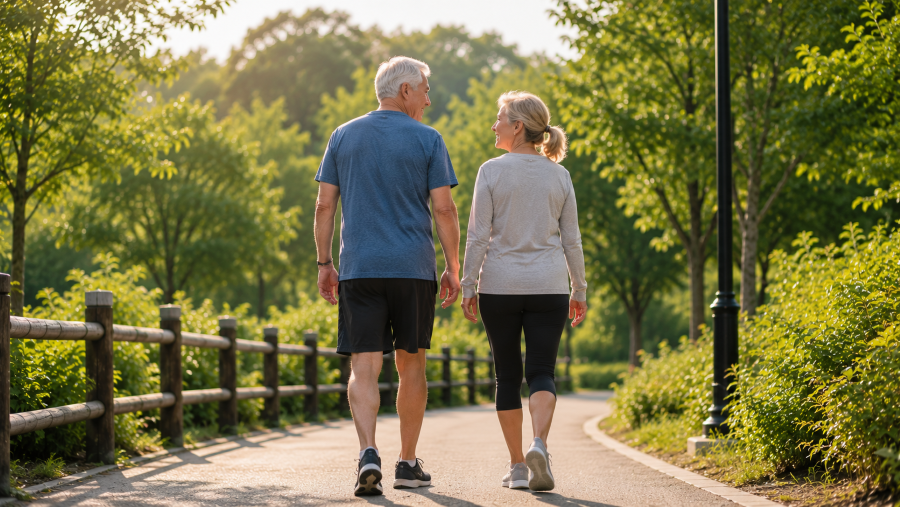
- Regular walking
- Gentle strength exercises
- Stretching
- Yoga
- Tai chi
can all support healthier movement and reduce fall risk.
Sometimes small environmental changes can help too:
- Improving lighting at home
- Removing loose rugs
- Wearing supportive shoes
- Keeping floors and walkways clear
These adjustments may seem simple, but they can make a surprisingly meaningful difference in fall prevention.
Not Every Balance Problem Is “Just Aging”
It is common to blame dizziness or instability on getting older.
But balance problems are not always caused by age alone.
Vision changes, dehydration, medication side effects, fatigue, and inner ear problems can all affect stability.
If dizziness or unsteadiness becomes frequent, it may be worth discussing with a healthcare professional instead of simply assuming it is normal aging.
Final Thoughts
Balance is one of those things people rarely think about until it starts to feel uncertain.
Yet it plays a major role in independence, mobility, confidence, and overall quality of life.
In many ways, fall prevention is not really about fear.
It is about protecting the ability to move comfortably, stay active, and continue living independently for as long as possible.
Sometimes small habits, small adjustments, and better awareness can make a much bigger difference than we expect.