

Is It Arthritis or Menopause-Related Joint Pain?

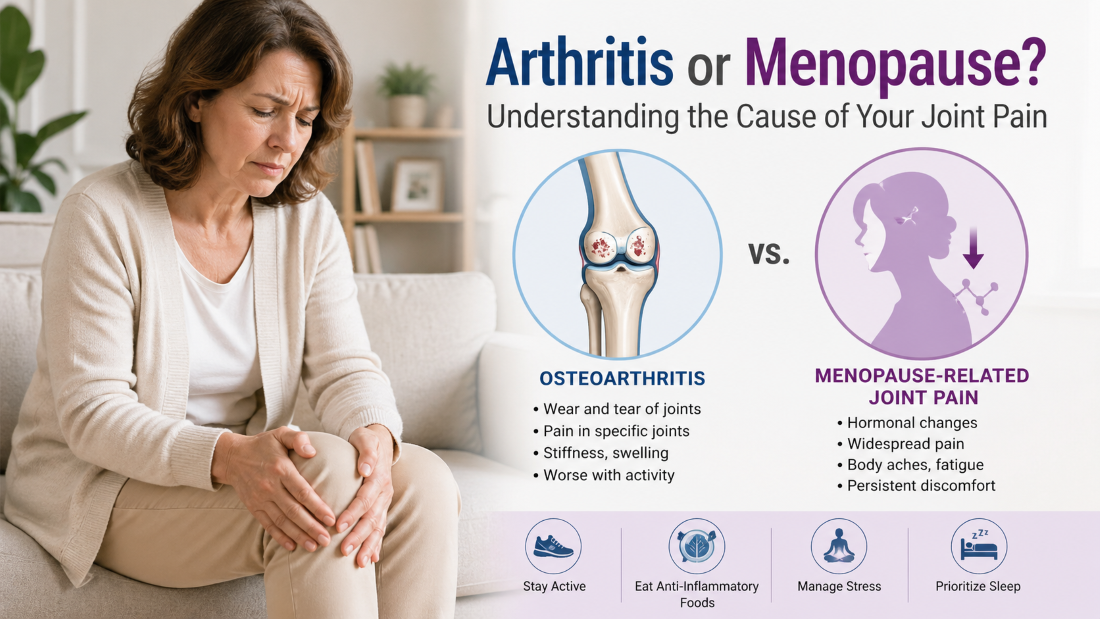
What Women in Their 40s and 50s Should Know
Joint pain in your 40s isn’t always arthritis. Learn how menopause-related changes may be causing your symptoms and what you can do about it.
Think your joint pain is arthritis? It could be menopause-related. Learn the signs, differences, and what your body may be telling you.
“I’ve been having more joint aches lately.”
“My body feels stiff, especially in the morning.”
If you’re in your late 40s or early 50s, these experiences may sound familiar.
Many women assume these symptoms are simply part of aging or the early signs of arthritis. However, there is another important possibility to consider:
👉 Musculoskeletal Syndrome of Menopause (MSM)
🤔 Arthritis vs. Menopause-Related Pain: What’s the Difference?
One of the most common causes of joint pain is osteoarthritis, often referred to as wear-and-tear arthritis. It develops over time as joints gradually break down.
In contrast, musculoskeletal syndrome of menopause is a newer concept that links declining estrogen levels to widespread joint and muscle pain.
Because the symptoms can overlap, it can be difficult to tell the difference.
🦴 Key Features of Osteoarthritis
Osteoarthritis is very common—affecting about one in seven adults in the United States.
Typical symptoms include:
- Pain in specific joints (knees, hips, hands)
- Stiffness, especially after rest
- Swelling or warmth around the joints
- Pain that worsens with activity
While it can begin in midlife, most cases occur in people over age 65.
🌿 Key Features of Musculoskeletal Syndrome of Menopause
Musculoskeletal syndrome of menopause presents somewhat differently:
- Widespread joint and muscle pain
- Generalized body aches without a clear cause
- Persistent discomfort throughout the day
- Fatigue often accompanies the pain
This condition is believed to be linked to declining estrogen levels, which can increase inflammation and affect muscle and joint tissues.
⚖️ How Can You Tell the Difference?
Although there is no simple test, these general patterns may help:
| Feature | Osteoarthritis | Menopause-Related Syndrome |
|---|---|---|
| Pain location | Localized joints | Widespread body pain |
| Cause | Joint wear and tear | Hormonal changes |
| Pattern | Worse with movement | Persistent discomfort |
| Additional signs | Swelling, warmth | Fatigue, body aches |
Keep in mind that both conditions can occur at the same time, making professional evaluation important.
💡 Why This Distinction Matters
Understanding the cause of your joint pain is essential because the management strategies differ:
- Osteoarthritis → Joint protection, weight management, physical therapy
- Menopause-related syndrome → Hormonal balance, overall wellness support
Misidentifying the cause may delay effective treatment.
✔️ What You Can Do Now
Regardless of the cause, certain lifestyle habits can help improve joint health:
- Engage in light strength training
- Stretch regularly to maintain flexibility
- Maintain a healthy weight
- Follow an anti-inflammatory diet (vegetables, healthy fats)
- Prioritize quality sleep
During midlife, paying attention to small changes in your body becomes increasingly important.
❤️ Final Thoughts
Joint pain is not always just a sign of aging.
It can be your body’s way of signaling deeper changes.
For women in their 40s and 50s, it’s important to look beyond arthritis alone and consider the role of hormonal shifts.
👉 Understanding your body more accurately
is the first step toward protecting your long-term health.